

The Future of Urban Housing in a Changing Climate: Regional Strategies for Climate-Induced Displacement. 

Our panel at the Africa Urban Forum did not shy away from hard truths. Climate-induced displacement is not a future threat; it is already happening. Entire communities are being uprooted, and the urban poor are hit first and hardest. We have the tools to solve this, and communities have the knowledge. What we lack is coordination, accountability, and the courage to work differently.  

1. We have tools, but we are not using them effectively. 

These tools map climate-risk settlements, calculate greenhouse gas emissions from infrastructure, and incorporate community knowledge into planning. The gap is not technological. It is political will, coordination, and accountability. 

2. Policy silos are failing us

Housing policies focus on meeting backlog targets, while Climate policies focus on adaptation. These two rarely speak to each other and that is the challenge. Planning laws do not yet recognise climate displacement as a driver of housing demand. When disaster strikes, no one knows who is responsible – is it the wildlife authority, the county, or the national government? Unfortunately, affected people wait years for compensation or relocation.

3. Communities are experts, but are rarely treated as such.

Indigenous and local knowledge is as valuable as any formal qualification, yet it has historically been dismissed. Residents know where water flows, where swamps once were, and much about their area. The example of the Mukuru Special Planning Area, where 42 partners worked together, is proof that inclusive, integrated planning works.

4. Consequences matter

Africa has wonderful documents: Agenda 2063, national urban policies, housing  ompacts etc however there are no consequences when governments, agencies, or civil society fail to act. “What happens when a nation does not do what it promised?

Accountability , real accountability , may be the single thing that unlocks everything else.
5.Practical solutions exist

Going vertical through densification creates space for climate-resilient infrastructure, such as sponge cities and permeable surfaces. Social housing (not just affordable housing) is the right tool for compensating displaced communities. Waste pickers, youth with AI and data skills, and local financiers all have solutions, but regulatory blockages and siloed working prevent scaling.

6. No one can do this alone

Housing, climate, and displacement cannot be solved by a single actor, whether a government, an NGO, or the private sector. The way forward is partnership, integration, and intentional community participation.

We left AUF with more conviction than ever: the solutions exist. What we need now is coordination, accountability, and the courage to work differently.  
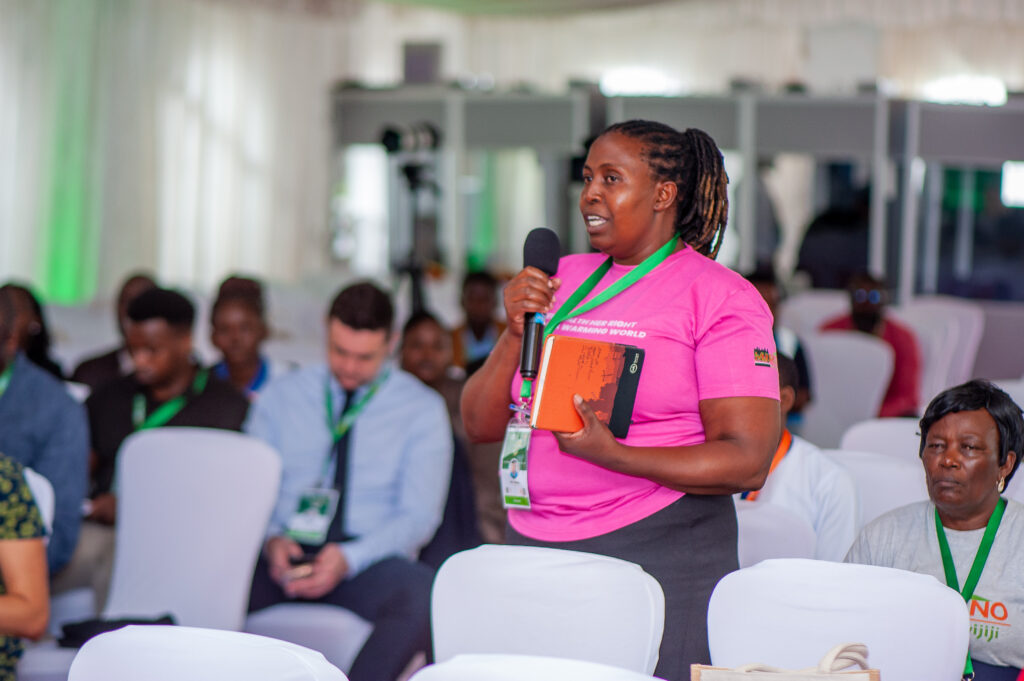
Panelists

Mr. Gitau Thabanja – Nakuru City Manager 

Ms. Dainah Kinya– Founder, Smart City Solutions 

Ms. Marion Rono – French Development Agency (Agence française de développement) 

For more regular updates, you can follow LEARN on LinkedIn and X